

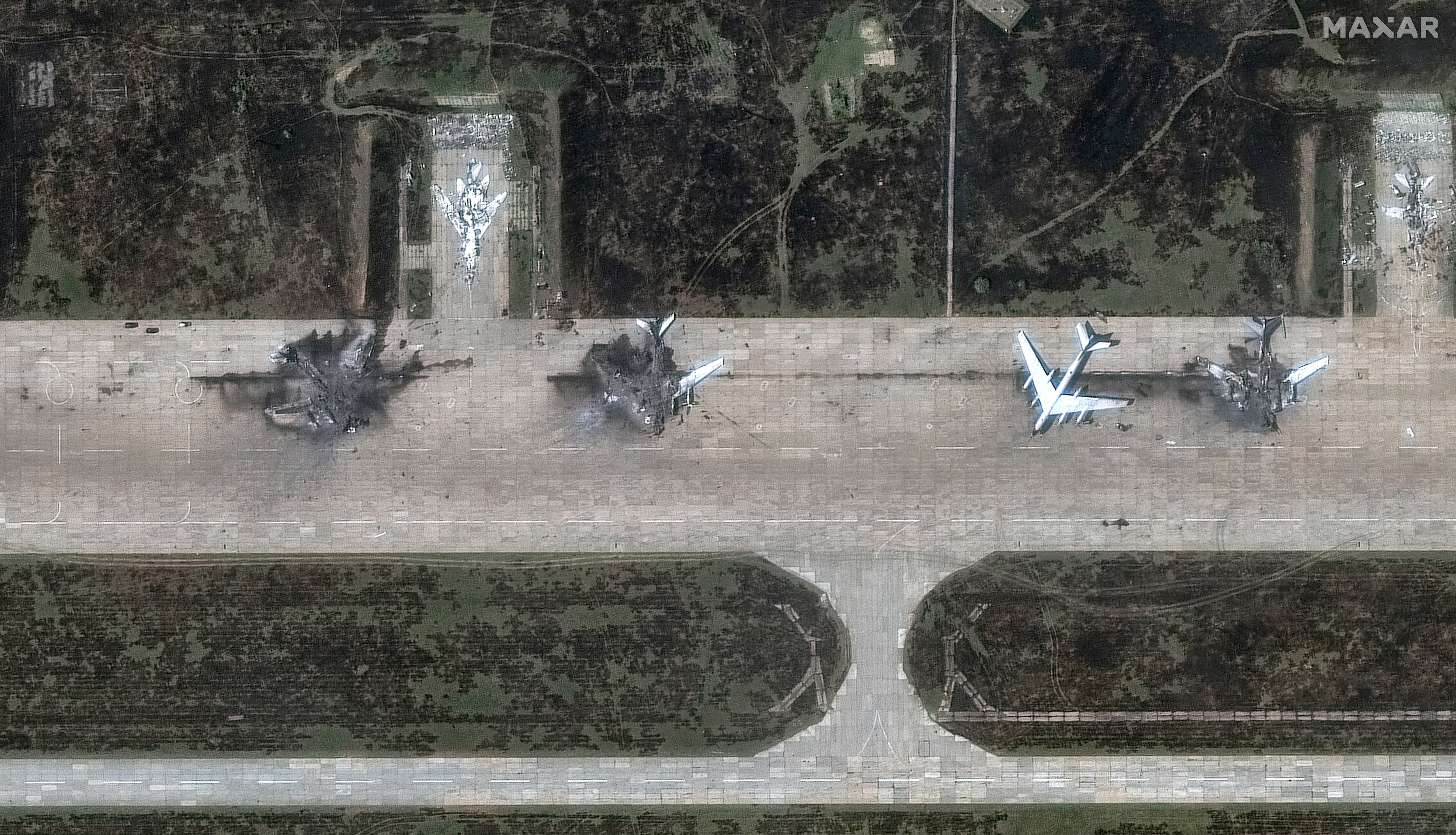
When Bernard Brodie published his essay, “Strategic Bombing: What It Can Do” in 1951, he sought to rescue airpower from its own mythology.1 In the wake of World War II, the Allied strategic bombing campaign stood both vindicated and discredited: its scale had been unprecedented, its moral cost undeniable, and its strategic efficacy fiercely debated to this day. Brodie, then a young academic at Yale and one of the first American strategists to think systematically about nuclear weapons and their use in military conflict, approached the question with dispassionate precision.2 He concluded that strategic bombing could impose tremendous economic strain, degrade military capacity, and accelerate collapse, but only when applied with coherent targeting, persistence, and coordination with other instruments of power.3 The real lesson, he wrote, was not that bombing was decisive or useless, but that its effects were conditional; contingent on what was struck, how long the pressure was maintained, and whether the political outcome sought was achievable through destruction.
In making this argument, Brodie departed sharply from earlier prophets of airpower such as Giulio Douhet, Hugh Trenchard, and Billy Mitchell.4 Where Douhet had promised that fleets of bombers could bypass armies and break nations through the air, Brodie recognized that societies under attack adapt rather than implode. He believed that targeting German and Japanese cities indiscriminately during the war was an “inordinate waste of bombs and bombing effort.”5 The ability to destroy was not the same as the ability to decide. That subtle distinction, between the capacity for destruction and the capacity for decision, would become the fulcrum of modern deterrence theory and remains the hinge of strategic drone warfare today.
Before tracing that continuity, it is worth defining what strategic drone bombing actually is. The term is really only in a casual stage at this point, yet its meaning is far from self-evident. Strategic drone bombing refers not merely to the use of unmanned aerial vehicles to strike targets, but to the use of those systems in pursuit of strategic-level objectives: the paralysis of an enemy’s war economy, the disruption of its logistical networks, the degradation of its national energy base, or the coercion of its civilian and political will. It differs from tactical drone strikes, which aim to destroy enemy forces or battlefield assets, and from operational strikes, which disrupt command-and-control in a given theater. The essence of strategic drone bombing lies in its intended cumulative effect on the adversary’s capacity and will to wage war.
Although drones feel novel, they are not fundamentally different from cruise missiles or loitering munitions; they simply occupy a flexible middle band between the two. Like missiles, they are unmanned, expendable delivery systems for explosive force, and many “drones” used in Ukraine today function as slow, GPS-guided cruise missiles with cameras attached. What distinguishes them is not their basic destructive logic but their endurance, recoverability, and sensor-shooter integration. In doctrinal terms, drones add duration and adaptability to the classic missile strike: they can search, correct, re-target, or abort, making them a more elastic instrument of strategic pressure. They represent evolution rather than revolution: a new way of applying an old theory of coercive airpower, with all the limitations and temptations that strategic bombing has always carried.
Brodie’s essay emerged at a moment when airpower’s moral and political meaning was shifting. The atomic bomb had amplified the logic of strategic attack to its ultimate form: annihilation at a stroke. Yet in that very extremity, it also exposed the limits of coercion. Hiroshima and Nagasaki demonstrated that destruction could potentially compel surrender but only under extraordinary circumstances, when a state was already on the verge of defeat and the enemy’s political center was directly threatened.6 The nuclear age forced strategists to ask what Brodie asked of conventional bombing: What does destruction do politically? How much destruction is enough to compel, deter, or persuade? In that sense, Brodie’s modestly titled essay was the first step in the intellectual genealogy that would lead to deterrence theory itself.
The logic of strategic bombing in Brodie’s time was industrial: vast fleets, centralized targets, and linear destruction. The logic of strategic bombing in the drone era is algorithmic: distributed platforms, networked targeting, and persistent surveillance. The shift from mass to precision has transformed the means of strategic attack while leaving the ends largely intact. The question remains the same: what can airpower do strategically?
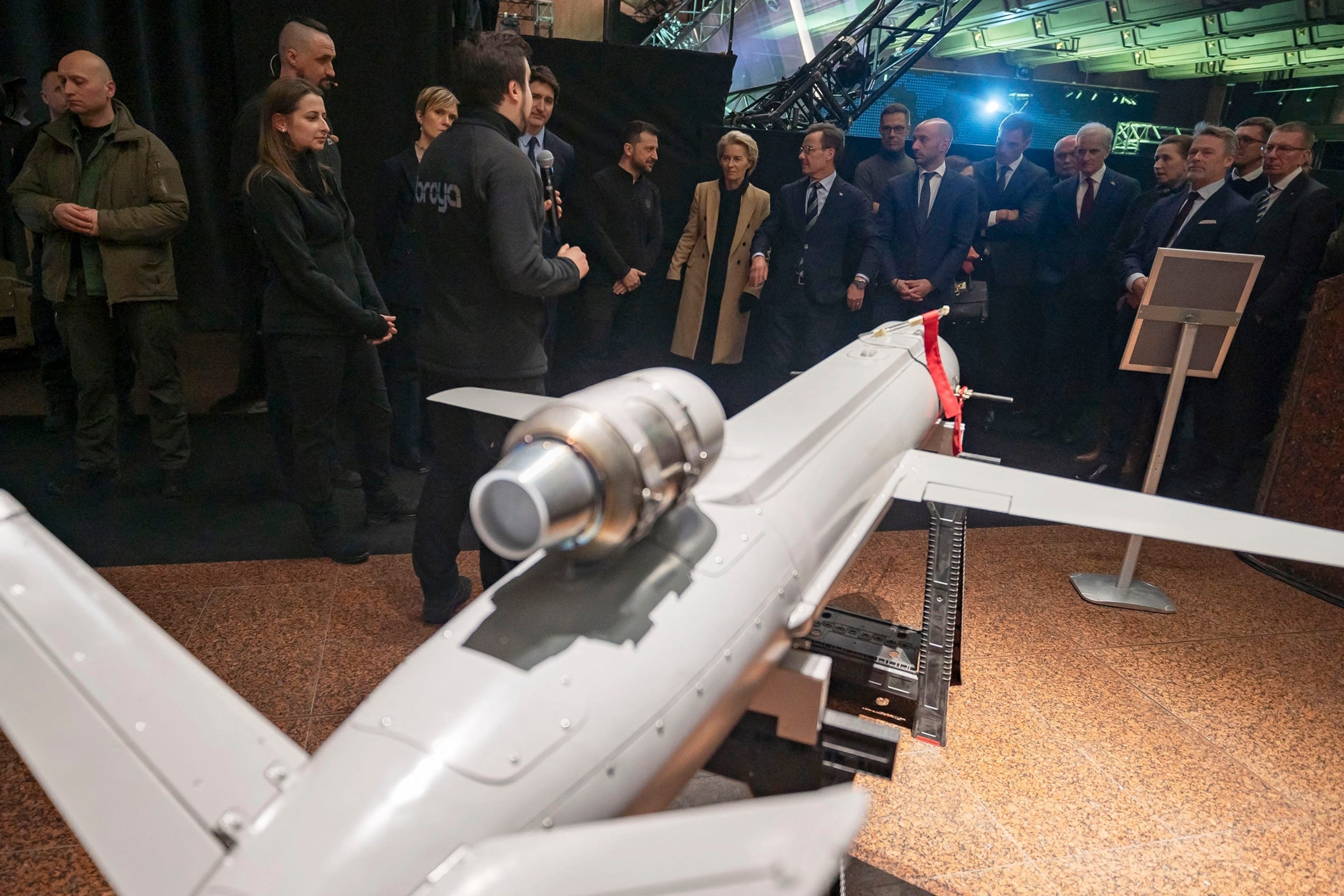
Unmanned aerial systems invert nearly every constraint that limited twentieth-century air forces. They are smaller, cheaper, more survivable, and scalable. They do not require trained pilots or high-end bases. They can be produced indigenously with commercial components and launched from improvised sites near the target area.7 In this sense, drones democratize strategic bombing: they spread the capacity for precision violence across a far broader spectrum of actors.8 A mid-sized state or even a militia with modest resources can now project disruption deep into an adversary’s territory without owning a single bomber or ballistic missile. The barrier between tactical harassment and strategic coercion is shrinking or might have vanished altogether.
This diffusion has both strategic and moral consequences. Strategically, it flattens the hierarchy of coercion in war: states no longer need vast industrial bases to threaten each other’s infrastructure. Morally, it lowers the threshold of use. Removing human pilots reduces domestic political risk, and the apparent precision of drone strikes obscures their cumulative effects. As Brodie might put it, the capacity to bomb has expanded, but the discipline to use that capacity strategically has not.
Every age of airpower reinvents its own theory of coercion.9 Douhet believed in civilian morale collapse; John Warden in center-of-gravity paralysis.10 Brodie belonged to the realist school that viewed bombing as one variable among many in the broader system of war. The goal of bombing was not to annihilate but to bargain through punishment: to alter the adversary’s expectations of future costs.11 Drone warfare reanimates that debate in miniature. In practice, however, the psychology of pain has not changed. Populations adapt; regimes reframe narratives; military organizations learn to disperse, decoy, and deceive. The coercive effect of drone bombing, therefore, depends less on its destructiveness than on the attacker’s theory of signaling, how each strike contributes to the adversary’s perception of futility. In this respect, drones inherit not only the mechanics but also the dilemmas of strategic bombing.
Brodie’s deeper insight was that coercion is relational, not mechanical. No amount of precision can substitute for political understanding. The attacker must know which nodes matter to the defender, not just economically but psychologically, and must anticipate how the defender will interpret pain. This relational logic remains the Achilles’ heel of modern drone strategy. Precision weapons make it easy to hit what is visible; they do not guarantee that what is visible is relevant. The temptation to equate transparency with understanding, to treat the ISR feed as strategy, repeats the same conceptual error that Brodie warned against: mistaking capacity for insight.
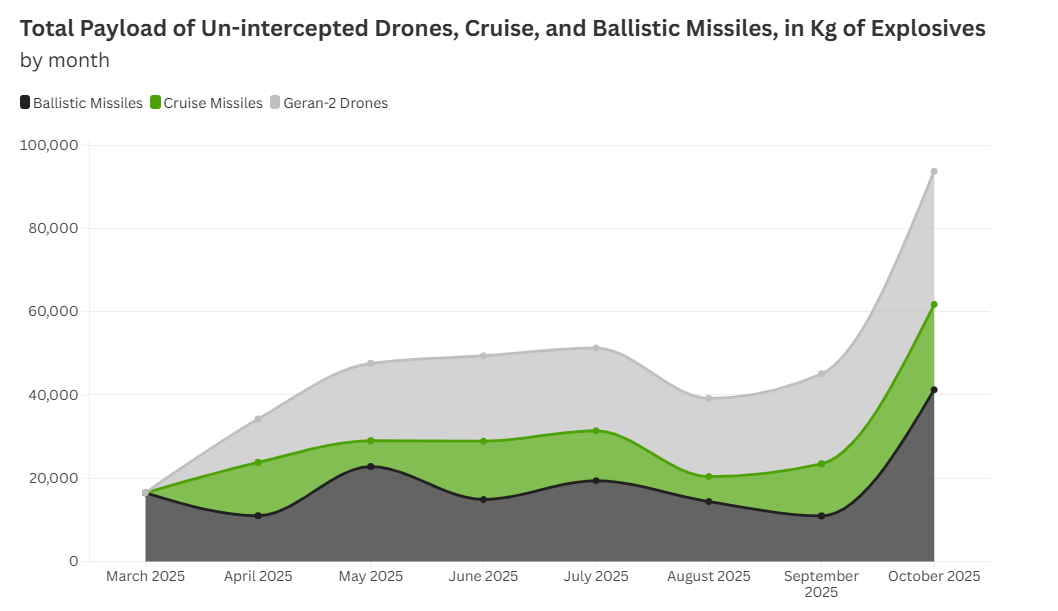
The war in Ukraine offers the most comprehensive test yet of strategic airpower in the drone age. Russia’s long-range campaign since 2022, which has involved thousands of missiles and drones, has followed a classic Douhet model: target critical infrastructure, impose social hardship, and eventually expect political concession.12 Its waves of missile and drone attacks on Ukraine’s power grid, logistics corridors, and industrial centers have certainly achieved disruption and killed hundreds of civilians.13 Ukrainian Gas Facilities providing heat were struck 7 times in October in attacks that knocked out 60% of production capacity.14 There are rolling blackouts throughout the country as Russia has stepped up its strike campaign, peaking in October with some 185,000 drones and missiles launched but this still has failed to compel strategic or political collapse.15 Polling over the summer from Gallup found that 69% of Ukrainians favor ending the war through negotiations as soon as possible, while just 24% support continuing the fight until achieving victory.16 But this appears to have correlated more with battlefield setbacks than with Russia’s strategic bombing. In other words, Russia’s bombardment has inflicted pain, but it has not yet produced the political paralysis or collapse that true strategic bombing requires.
Ukraine’s response has been both defensive and offensive, but has focused on a more precision strike campaign targeting key Russian industrial nodes to undermine the Russian economy and morale.17 On the defensive side, it has hardened substations, buried critical cables, and improved interception rates with Western-supplied air defenses.18 On the offensive side, it has launched its own strategic bombing campaign with long-range and short-range drones. Long-range one-way UAVs have struck oil depots, rail yards, and refineries deep inside Russia, disrupting refining capacity and briefly affecting domestic fuel prices.19 In symbolic terms, these attacks represent a historic reversal: a state without a bomber force conducting sustained strategic strikes against a nuclear-armed superpower. Operationally, they demonstrate that drones can substitute for traditional airpower in achieving limited interdiction effects. Strategically, however, the same limits apply. Russia’s vast geography, dispersed industry, and redundant logistics networks prevent localized disruption from scaling into systemic paralysis.
The result of these campaigns is a kind of mutual strategic harassment: both sides can impose pain, but neither can compel a decision nor have they achieved air superiority to augment their armies on the ground. Brodie might have called it the “stalemate of the air.” Each side can reach deep, strike accurately, and claim temporary victories, yet the political calculus of surrender or concession remains untouched. Drones have expanded the options and the map of war, but not the logic of victory.
Perhaps the most revolutionary aspect of the drone age is not technological but political: drones allow states to conduct strategic bombing without traditional air forces. Historically, strategic bombing was the prerogative of industrial powers capable of building heavy bombers, securing basing networks, and sustaining vast maintenance ecosystems. Today, commercially adapted drones and imported loitering munitions allow states such as Ukraine, Iran, and Azerbaijan, and even non-state actors like the Houthis to perform strategic attacks once reserved for major powers. This represents a structural shift in global coercion dynamics.
Iran exemplifies the new model. Through its drone programs, Tehran has extended strategic reach across the Middle East without deploying a single conventional bomber. Its proxies in Yemen, Iraq, and Lebanon now possess the capacity to strike energy infrastructure and shipping lanes across the Gulf and Red Sea.20 The cost of entry is minimal; the deterrent effect is substantial. Similarly, Azerbaijan’s use of Turkish Bayraktar TB2s in Nagorno-Karabakh demonstrated how small states can achieve decisive battlefield effects and, by extension, strategic leverage through targeted strikes on logistics and morale.21 In both cases, drones compensated for the absence of heavy airpower by providing persistent, politically palpable precision.
This diffusion of strategic bombing capability erodes the monopoly that great powers once held over coercive force from the air. It also complicates deterrence. When many actors can strike critical infrastructure cheaply, the distinction between limited war and strategic war begins to blur. The result might be a sort of “gray-zone coercion from the air”: strategic effects achieved through cumulative, low-signature attacks that fall below traditional thresholds of war. The capacity to bomb without escalation is now a routine feature of modern conflict.
Brodie’s skepticism was both moral and strategic. He feared that airpower, by distancing the attacker from the attacked, would erode the moral friction that restrains war. The pilot at thirty thousand feet, he wrote, experiences the war as an abstraction. The drone operator, potentially sitting continents away, extends that abstraction to its extreme. Technology has magnified the asymmetry of risk between attacker and victim to unprecedented levels. This moral distance matters strategically because it shapes decision-making. Leaders insulated from casualties are more likely to authorize strikes; publics detached from consequences are less likely to question them.22 The promise of precision becomes a psychological anesthetic. The proliferation of cheap drones has made violence both more selective and more seductive. The result is an era of perpetual limited war, where the threshold for action is low but the appetite for strategy is lower still.
Another dimension Brodie would recognize is the economics of airpower. In World War II, strategic bombing consumed enormous resources; aircraft production, fuel, and crew training imposed high opportunity costs as he wrote, “the destruction of the German economy was achieved with a minute percentage of the bombs actually dropped on Germany.”23 The drone era reverses that ratio. Offense is now cheaper than defense. A thousand-dollar quadcopter can provoke the expenditure of a multimillion-dollar interceptor missile. This inversion undermines classical deterrence theory, which assumed that defense could be made affordable through scale and technology. In the drone age, cost asymmetry becomes a strategic weapon. The implications are profound. States can sustain drone campaigns far longer than conventional air offensives, turning what were once episodic raids into continuous pressure systems. The cumulative psychological and logistical effect may be modest per strike, but constant attrition corrodes resilience over time. The problem, again, is translation: converting economic pain into political change. The same could be said of Ukraine’s cities or Russia’s refineries in 2025. Strategic bombing remains a contest between destruction and adaptation, not merely between attacker and defender.
The diffusion of drone technology is transforming deterrence into a politics of endurance. When everyone can strike but no one can win decisively, wars risk becoming permanent. This dynamic is visible not only in Ukraine but in the Middle East and the Caucasus regions, where drones have become the default instrument of signaling and punishment. In each case, the logic is the same: limited violence as a form of communication. Yet as Schelling warned, communication through violence requires control, and control is precisely what cheap, proliferated technology erodes.24 The long-term danger is strategic entropy: a world where constant low-level drone warfare normalizes the erosion of sovereignty, humanitarian law, and political restraint. Brodie’s question—what can bombing do?—thus acquires a darker answer. It can desensitize, distort, and prolong. The power to bomb without cost is the power to forget that war is supposed to end.
Brodie’s brilliance lay in his insistence on limits. Strategic bombing, he argued, was a means of accelerating an enemy’s defeat, not a substitute for achieving it. It could paralyze, exhaust, or degrade but not compel in the absence of ground truth. Eight decades later, drones have given that insight new urgency. They have made the tools of coercion cheaper, the reach of exhaustion longer, and the illusion of control more seductive. Yet the essence of the problem remains the same. Technology can compress time and space, but not human will.
The Ukraine war will likely stand as the first significant case study in strategic drone warfare: a conflict defined less by territorial conquest than by reciprocal infrastructure attrition. It will also stand as proof of Brodie’s paradox: that the ability to destroy anything does not confer the ability to decide anything. Precision has replaced mass, endurance has replaced risk, but strategy remains stubbornly human. Drones can paralyze, but only people can conclude. The future of strategic bombing will not be written in the flight paths of drones but in the doctrines that govern them. The challenge for policymakers and military thinkers is to recover Brodie’s discipline in an age that mistakes data for understanding. The lesson he offered in 1951, be skeptical of what bombing promises, has become the essential wisdom of the twenty-first century. The technology has evolved; the dilemma endures.
Bernard Brodie, “Strategic Bombing: What can it do?” The Reporter (1950): 28-31.
For more details on his early career, see Fred Kaplan, The Wizards of Armageddon (Stanford, CA: Stanford University Press, 1991), 9-50.
Brodie, 29.
See Giulio Douhet, The Command of the Air (London: Faber, 1942), Billy Mitchell, Winged Defense (New York: G.P. Putnam’s Sons, 1925), and Barry Powers, Strategy without a Slide Rule: British Air Strategy, 1914-1939 (London: Croom Helm, 1976) for details about Trenchard.
Brodie, 28.
Robert Pape, Bombing to Win: Air Power and Coercion in War (Ithaca: Cornell University Press, 1996), 58.
On this topic, see Richard Frank, Downfall: The End of the Imperial Japanese Empire (New York: Random House, 1999), 282–98, Robert Pape, “Why Japan Surrendered.” International Security 18, no. 2 (1993): 154–201, and United States Strategic Bombing Survey, Japan’s Struggle to End the War (Washington: War Department, 1945).
Federico Borsari and Gordon B. “Skip” Davis, Jr, “An Urgent Matter of Drones,” Centre for European Policy Analysis, September 27, 2023.
See Pape, 12-54.
See David Fadok, John Boyd and John Warden: Air Power’s Quest for Strategic Paralysis (Maxwell Air Force Base, AL: Air University Press, School of Advanced Airpower Studies, February 1995).
See the classic, Thomas Schelling, Arms and Influence (New Haven: Yale University Press, 1966), 3–34.
It’s challenging to get a precise count of the munitions and tonnage Russia has launched throughout the war. Currently, the Institute for the Study of War and Ukraine Air War Monitor provides the most accurate open-source numbers day to day and month to month. CSIS reported that Russia launched 11,466 missiles at Ukraine from September 2022–2024
Caspar Hobhouse, “Keeping the lights on: How Ukraine can build a resilient energy system (and why this matters to the EU),” European Union Institute for Security Studies, March 25, 2025.
Konstant Méheut and Olha Konovalova, “Russia Tried to Cut Ukraine’s Lights. Now It’s Aiming for the Heat.” The New York Times, November 15, 2025.
Marcus Welsch, Ukraine Air War Monitor, Vol. X: Analyses for the Protection of Ukrainian Cities and Infrastructure (Kyiv: Kyiv Dialogue and Konrad Adenauer Stiftung, November 4, 2025).
Benedict Vigers, “Ukrainian Support for War Effort Collapses,” Gallup, August 7, 2025.
Pape, 62.
Giorgio Di Mizio and Michael Gjerstad, “Ukraine’s Ground-Based Air Defence: Evolution, Resilience and Pressure,” IISS Military Balance Blog, February 24, 2025.
Kyiv Post, “How Ukraine’s Naval and Drone Strikes Disrupted Russia’s Black Sea Oil Exports,” Kyiv Post, November, 19, 2025.
Susannah George, Samuel Granados, Laris Karklis and Nilo Tabrizy, “What Iran’s attack on Israel revealed about its weapons arsenal,” The Washington Post, April 17, 2024.
Shaan Shaikh and Wes Rumbaugh, “The Air and Missile War in Nagorno-Karabakh: Lessons for the Future of Strike and Defense,” Center for Strategic and International Studies, December 8, 2020.
Sarah Croco, “The Decider’s Dilemma: Leader Culpability, War Outcomes, and Domestic Punishment.” The American Political Science Review 105, no. 3 (2011): 457–77.
Brodie, 31.
Schelling, 126-135.
Excellent and important piece. Thought provoking and a pleasure to read. I am saving it to refer back to. I'm going to have to figure out how to cite a Substack post with an unknown author, because I will cite this in my future work.
One quibble. But an important one. Bombing Hiroshima and Nagasaki did not coerce Japan's surrender.
1) As even small "r" realists argue, tender-hearted feelings towards civilians don't influence wartime leaders' decisions. Of course the entry of a great power into a war that Japan was already losing would have been paramount in the strategic calculations of Japan's leaders.
2) Japan's Supreme War Council said, in June of 1945, that if the Soviets declared war they would have to surrender. The Soviets did and they did. Within 26 hours.
3) Killing civilians does not, by itself, win wars. Find an instance in history of a city being bombed, burned, sacked, poisoned, or otherwise destroyed and that act coercing surrender. As long as military forces are in being and capable of carrying on the fight, the war goes on. Perhaps my claim should be limited to existential wars, but even so, I am frankly perplexed that this belief - killing civilians can win wars - has been been given credence for so long with so little evidence to support it.
4) War is a military contest decided by military outcomes. Civilians are, sadly, beside the point.
5) Japan's leaders were the least likely wartime leaders to be moved by civilian deaths. Most were military men inculcated with bushido, a harsh and demanding warrior's code handed down from the samurai.
More here: https://wardhayeswilson.substack.com/p/bushido
We can agree to disagree, but again, excellent piece.
Excellent analysis and a very thoughtful disection of the current 'drone campaigns'
Sharing to an active media grouo elsewhere.
I would suggest that, if there is a 'moral' hand to play,that Ukraine edges it by not killing Russians in their beds ref:Ternopil
That will be a clear inflection point for historians.
Thanks again,really enjoyed your thoughts.